
Table of Contents
- Introduction to Data Transformation
- Why Understanding Where Data Transformation is Required Matters
- Where Data Transformation is Required – Key Scenarios
- 3.1 Migrating Legacy Systems to Modern Applications
- 3.2 Translating from One Data Model to Another
- 3.3 Integrating Heterogeneous Systems
- 3.4 Achieving Enterprise-Wide Integration
- Types of Data Transformations
- Real-Life Examples
- Benefits of Understanding Where Data Transformation Is Required
- Challenges in Data Transformation
- Best Practices for Successful Data Transformation
- Conclusion
Where Data Transformation is Required – A Complete and Practical Blog
Data is the backbone of every successful modern business. Every application, every system, and every report depends on accurate, consistent, and usable data. But before companies can use this data for decision-making, analytics, automation, or system upgrades, it must often be transformed.
Right at the beginning, it is important to understand Where Data Transformation is Required, because this helps organizations plan resources, avoid system failures, prevent data loss, and ensure smooth business operations.
In this detailed blog, we explore why and where data transformation is essential, supported with examples, best practices, and enterprise-level scenarios.
Why Understanding Where Data Transformation is Required Matters
Every organization deals with data coming from different sources—web apps, mobile apps, CRM systems, IoT devices, databases, spreadsheets, and legacy systems. All this data cannot be used as-is.
Without transformation:
- Data becomes inconsistent
- Systems fail during migration
- Reports become unreliable
- Duplicate or incorrect values appear
- Integration becomes impossible
This is why organizations must clearly identify where data transformation is required in their information systems.
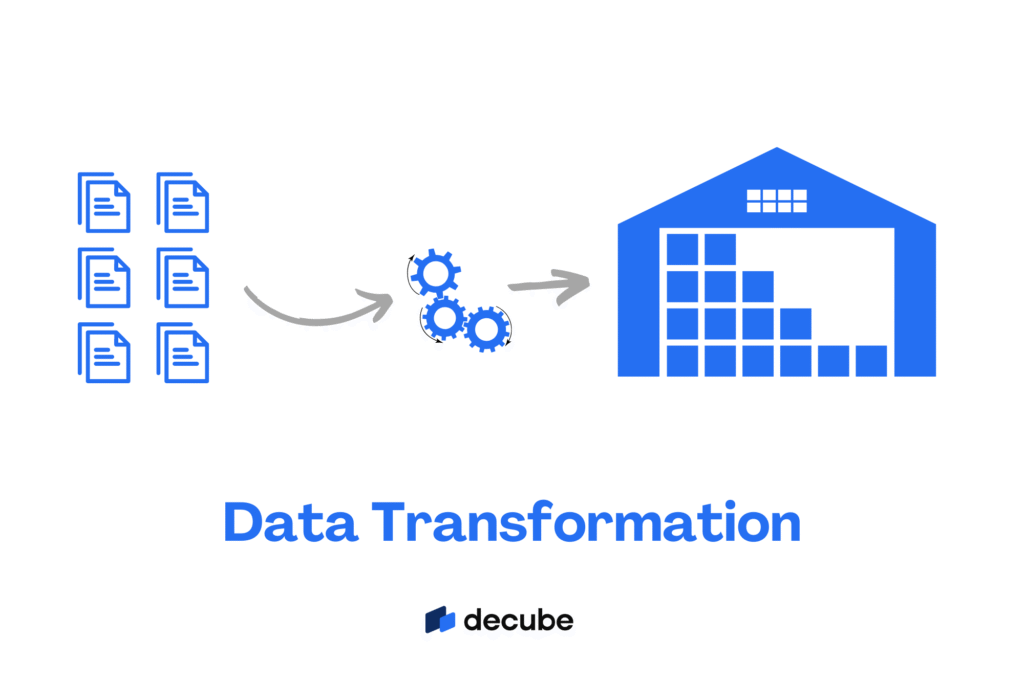
Where Data Transformation is Required – Key Scenarios
Below are the major enterprise-level situations where data transformation becomes essential.
1. Migrating Legacy Systems to Modern Applications
Legacy systems often run on outdated technologies—COBOL, old mainframes, flat files, or outdated database structures. When organizations move to modern systems such as:
- SQL-based databases
- Cloud platforms
- ERP systems (SAP, Oracle, Dynamics)
- AI-driven platforms
- Data warehouses
they cannot copy data directly.
Why Transformation Is Required Here?
- Old data formats may not match new formats
- Data types change (String → Int, Text → Date, etc.)
- Missing, duplicate, or corrupted values need fixing
- Business logic gets updated
- Character encoding and naming conventions differ
Example
A hospital shifting from a 1995 patient management system to a cloud-based EHR must transform:
- “DOB: 12-05-95” to standardized “1995-05-12”
- Diagnosis codes into modern ICD-10 formats
- Address fields into structured format (City, Zip, Region)
This is a classic case Where Data Transformation is Required.
Read more about Conceptual Model of DWH
2. Translating from One Data Model to Another
Different applications use different data models—hierarchical, relational, object-oriented, JSON-based, or document-based.
When transferring data across models, transformation becomes unavoidable.
Real Situations
- SQL → NoSQL
- XML → JSON
- Denormalized → Normalized
- Flat files → Relational tables
Example
An e-commerce company shifts from MySQL tables to MongoDB.
Relational data such as:
Customer -> Orders -> Payments
must be transformed into nested JSON structures.
This scenario clearly shows Where Data Transformation is Required in data modeling environments.
3. Integrating Heterogeneous Systems
Modern organizations use a mix of systems such as:
- CRM (Salesforce)
- ERP (SAP)
- HRM (Workday)
- Ticketing (ServiceNow)
- Marketing platforms
- Custom in-house systems
All these systems store data differently, using:
- Different data types
- Different formats
- Different naming conventions
- Different structures
Why Transformation Is Required Here?
To ensure smooth communication between systems, data must be transformed so that:
- Field names match
- Formats are standardized
- Units and measurement systems align
- Values follow consistent rules
Example
If Salesforce stores phone numbers as:+92-300-1234567
but SAP requires:03001234567
you must transform them before integration.
4. Achieving Enterprise-Wide Integration
Large businesses aim for a single source of truth using:
- Enterprise Data Warehouse (EDW)
- Data lakes
- Data marts
- Business intelligence dashboards
- Analytics and AI models
Why Transformation Is Required?
You cannot directly load raw data into BI systems. It must be:
- Cleaned
- Standardized
- Validated
- Aggregated
- Merged
- Normalized
Without data transformation, enterprise-wide reporting becomes unreliable.
Example
A bank integrating data from:
- ATM logs
- Mobile apps
- Branch operations
- Online transactions
must transform all datasets into a unified, consistent enterprise data format.
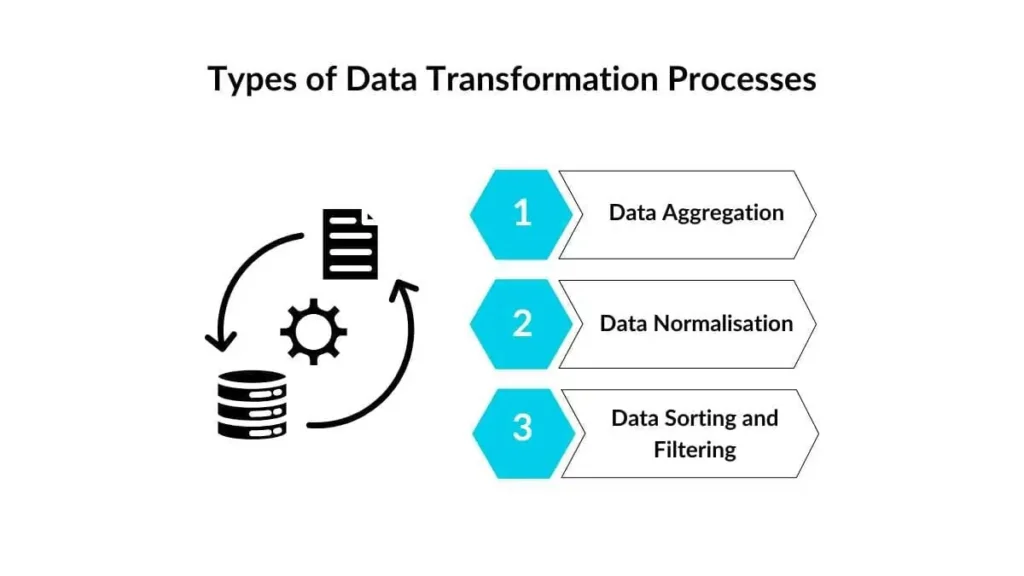
Types of Data Transformations
Understanding where data transformation is required also depends on the type of transformation.
1. Format Transformation
CSV ↔ JSON
XML ↔ SQL Tables
2. Data Cleaning
Fixing errors, removing duplicates
3. Standardization
Converting to a common format (date, phone, units)
4. Aggregation
Summaries, totals, averages
5. Splitting and Merging Fields
Example: FullName → FirstName + LastName
6. Enrichment
Adding missing value using external datasets
7. Data Validation
Ensuring correct formats and ranges
8. Data Mapping
Mapping old attributes to new ones
All these transformations support the four major cases Where Data Transformation is Required.
Real-Life Examples of Where Data Transformation Is Required
Example 1: Banking System Upgrade
When banks replace their old core banking system, they must transform:
- Account numbers
- Transactions
- Customer profiles
- Loan records
Example 2: Healthcare Integration
Hospitals integrating lab systems, pharmacy systems, appointment systems require:
- Date formatting
- Code standardization
- Patient ID mapping
Example 3: Retail Business Analytics
Retailers merging POS, e-commerce, and CRM data must transform each dataset for BI dashboards.
Example 4: University Data Warehouse
Student records from admissions, exams, LMS, and finance must be transformed to create a unified student insight dashboard.
Benefits of Knowing Where Data Transformation Is Required
- Ensures data accuracy
- Enables better decision-making
- Improves customer experience
- Supports system modernization
- Enhances reporting quality
- Boosts automation
- Removes errors and redundancy
- Reduces system integration failures
Challenges in Data Transformation
Even though we know Where Data Transformation is Required, organizations face challenges such as:
- Data inconsistency
- Missing values
- Poor-quality legacy data
- Complex mapping rules
- High cost of migration
- Scalability issues
- Multi-source conflicts
- Governance and compliance issues
But with proper planning, these can be minimized.
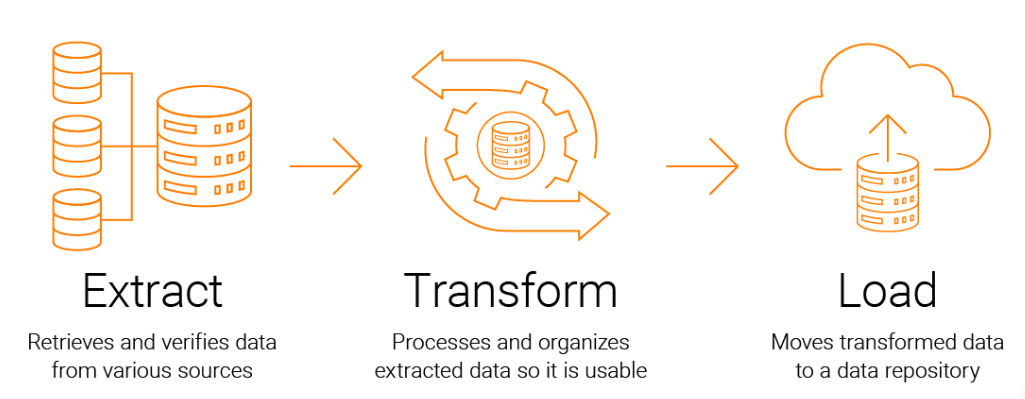
Best Practices for Successful Data Transformation
- Identify all sources
- Define clear business rules
- Perform data profiling
- Use ETL tools like SSIS, Informatica, Talend
- Create data dictionaries
- Implement data validation checks
- Test with sample datasets
- Maintain a version-controlled log
- Ensure data governance and security
Conclusion
Understanding Where Data Transformation is Required is critical for any organization that wants smooth migrations, accurate analytics, successful integrations, and enterprise-wide consistency. Whether you are upgrading old systems, merging data from multiple sources, or building an enterprise warehouse, transformation ensures reliability, standardization, and meaningful insights.
If companies ignore data transformation, the entire digital transformation process collapses. But if they follow best practices, they unlock powerful business intelligence, AI opportunities, and a stronger competitive advantage.