
Table of Contents
- Introduction
- What Is the Chi-Square Test of Independence
- When to Use the Chi-Square Test of Independence
- Categorical Data
- Nominal Data
- Ordinal Data
- Likert Scale and Its Role
- Contingency Tables
- Hypotheses in the Chi-Square Test of Independence
- Assumptions and Requirements
- Illustrated Example: Ice Cream Preference and Gender
- Step-by-Step Reasoning for Interpretation
- Example: Likert Scale Responses Across Age Groups
- Common Uses in Research and Data Science
- Strengths of the Test
- Limitations of the Test
- Conclusion

1. Introduction
The Chi-Square Test of Independence is a tool that helps us understand whether two variables in a dataset are connected. For example, a researcher may want to know if men and women prefer different types of ice cream. A business analyst may want to examine whether age influences satisfaction with a product. A psychologist may want to discover whether education level is related to stress levels.
In all such cases, the Chi-Square Test of Independence provides an answer by comparing actual data with what would be expected if no relationship existed between the variables. Because it is simple, flexible, and applicable to a wide range of fields, it has become a core method in modern statistical analysis.
2. What Is the Chi-Square Test of Independence
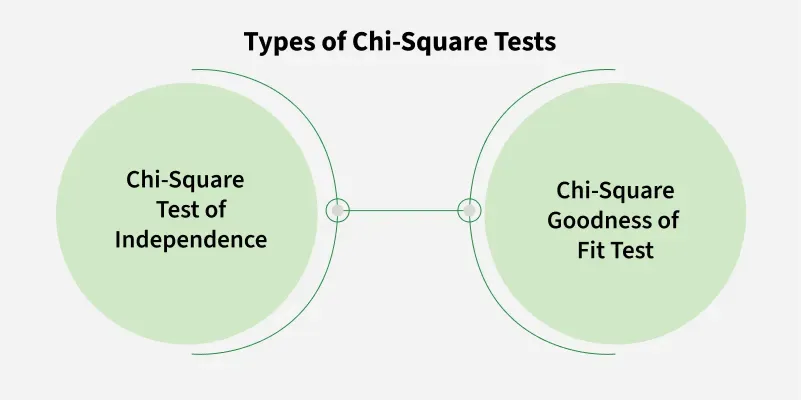
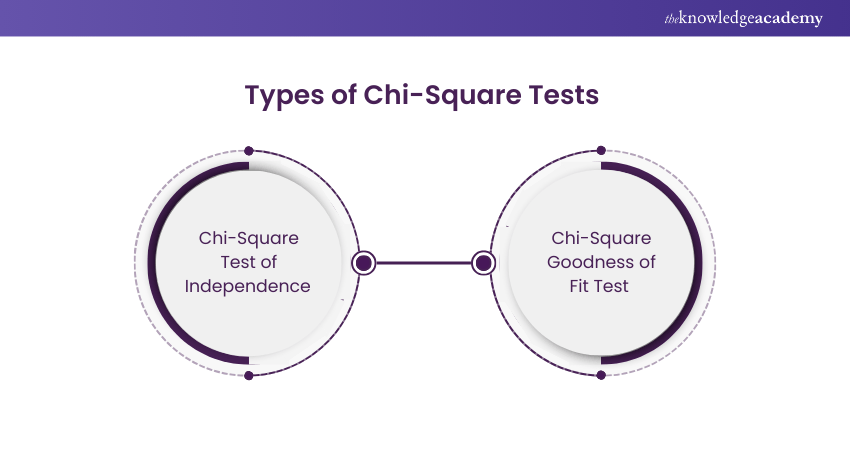
The Chi-Square Test of Independence examines whether two categorical variables are related. A categorical variable is one that places individuals into groups or categories. For example, gender, favorite color, education level, type of mobile phone, and satisfaction level are all categorical variables.
The test works by comparing the number of people who fall into each category combination with the number we would expect if the two variables were completely unrelated. If the difference between the actual and expected counts is small, the variables are considered independent. If the difference is large, the variables are considered dependent, meaning they show a relationship.
This test does not explain the direction of the relationship or why it exists. It only tells us whether or not a relationship is present.
3. When to Use the Chi-Square Test of Independence
This test is appropriate when:
- You have two categorical variables.
- You want to know whether they are related or independent.
- Your data can be organized into a table of counts showing how many individuals fall into each category combination.
- Your goal is to evaluate an association, not to prove causation.
The test is widely used in many real-world settings. Some common examples include:
- Determining whether gender influences choice of clothing brand
- Studying whether education level affects job satisfaction
- Checking whether smokers and non-smokers differ in health outcomes
- Analyzing survey responses across different age groups
Whenever a researcher wants to explore relationships between groups or categories, the Chi-Square Test of Independence becomes a valuable tool.
4. Categorical Data
Categorical data is information that can be divided into distinct groups. Unlike numerical data, it does not involve measurements or calculations but instead involves classification. Examples of categorical data include marital status, blood type, job category, or satisfaction level.
Categorical data is the foundation of the Chi-Square Test of Independence. The test only works when data is grouped in categories, not when values are continuous like height, weight, or income unless those variables are converted into groups.
5. Nominal Data
Nominal data is a type of categorical data where categories have no natural order. For example:
- Types of blood
- Gender categories
- Departments in an organization
- Favorite leisure activities
These categories do not follow a natural sequence. One category is not considered greater or smaller than another. Nominal data works perfectly with the Chi-Square Test of Independence because the test only requires counts in each category.
6. Ordinal Data
Ordinal data represents categories that do follow a natural order, but the distance between the categories is not fixed. Examples include:
- Levels of education: high school, bachelor’s degree, master’s degree, doctorate
- Customer satisfaction: poor, fair, good, excellent
- Ranking of preferences: low, medium, high
Ordinal data falls between nominal and numerical data. It shows rank, but not exact differences between ranks. It can still be analyzed using the Chi-Square Test of Independence because the test only deals with counts, not the mathematical distance between categories.
7. Likert Scale and Its Role
A Likert scale is a special type of ordinal data often used in surveys to measure opinions or attitudes. A standard Likert scale asks respondents to choose one of several ordered responses such as:
- Strongly disagree
- Disagree
- Neutral
- Agree
- Strongly agree
Likert scales are extremely common in psychological research, business surveys, educational studies, and public opinion polling.
The Chi-Square Test of Independence is widely used to analyze Likert scale responses when comparing different groups. For example:
- Do different age groups differ in their level of agreement with a statement?
- Is satisfaction with a product related to the customer’s job category?
Because Likert scale data is ordinal and categorical, it fits well within the requirements of this test.
8. Contingency Tables
A contingency table is a simple grid that displays how many individuals fall into each combination of categories. It contains rows and columns, each representing the categories of one variable.
For example, a table may have:
- Rows representing gender
- Columns representing favorite ice cream type
Every cell in the table contains the number of individuals who belong to both categories. This table becomes the basis for conducting the Chi-Square Test of Independence.
9. Hypotheses in the Chi-Square Test of Independence
The test begins with two hypotheses:
The null hypothesis states that the two variables are independent, meaning no relationship exists.
The alternative hypothesis states that the two variables are dependent, meaning a relationship does exist.
The test’s purpose is to determine whether the data provides enough evidence to reject the null hypothesis.
Read More about ML hypothesis selection
10. Assumptions and Requirements
For the test to be valid, several important conditions must be met. These include:
- The data must be collected from a random sample.
- The information must be organized as counts in a two-way table.
- Each expected count should be sufficiently large to ensure the test’s reliability.
When these assumptions are satisfied, the Chi-Square Test of Independence is considered accurate and effective.
11. Illustrated Example: Ice Cream Preference and Gender
The lecture notes present a well-known example involving 2200 adults categorized by gender and their preferred way of eating ice cream. This example is useful because it clearly shows how the test works in practice.
The categories include different ice cream preferences such as eating from a cup, a cone, a sundae, a sandwich, or other methods. The table shows the number of males and females choosing each method. By comparing the counts for each combination, the test helps determine whether gender influences ice cream preference.
In simple English, the question being asked is:
Do men and women prefer different ways of eating ice cream, or are their preferences similar?
12. Step-by-Step Reasoning for Interpretation
Although the lecture notes contain detailed mathematical calculations, the reasoning can be explained in simple terms without any formula.
Here is the logical process:
- First, we observe how many men and women prefer each ice cream type.
- Next, we consider what the distribution would look like if gender had no influence.
- We compare the actual data with the expected pattern under independence.
- If the differences between actual and expected values are very small, we say the variables are independent.
- If the differences are noticeably large, we reject the assumption of independence and conclude the variables are related.
In the ice cream example, the differences were large enough to show that gender and ice cream preference are related.
13. Example: Likert Scale Responses Across Age Groups
The lecture notes include another example based on a Likert scale survey involving three age groups. Each group rated a statement on a five-point Likert scale. The purpose of the test is to determine whether age affects the pattern of responses.
The analysis showed that the distribution of responses differed across age groups. Therefore, the test concluded that age group and Likert scale responses were related.
This example highlights how the Chi-Square Test of Independence is used in modern survey research, business analytics, and psychology.
14. Common Uses in Research and Data Science
The Chi-Square Test of Independence is used in a wide range of fields:
- In medicine, it helps determine whether lifestyle factors are related to disease outcomes.
- In education, it helps evaluate differences in learning preferences across student groups.
- In business, it is used in market research, customer segmentation, and A B testing.
- In social sciences, it helps analyze opinions, behaviors, and attitudes using survey data.
Any time researchers compare groups based on categorical data, this test becomes an essential tool.
15. Strengths of the Test
The Chi-Square Test of Independence offers several advantages:
- It is easy to understand and apply.
- It does not require assumptions about the shape of the population distribution.
- It works well with large datasets.
- It is ideal for survey data and categorical analysis.
- It helps reveal patterns that may not be immediately obvious.
Because of these strengths, the test is widely recommended in introductory and advanced statistics courses.
16. Limitations of the Test
Despite its usefulness, the test has several limitations:
- It does not indicate the strength or direction of the relationship.
- It cannot be used with very small sample sizes.
- It cannot be used with continuous data unless the data is grouped into categories.
- It is sensitive to extremely large datasets, which can lead to significant results even for small differences.
Understanding these limitations helps researchers choose the right method for their analysis.

17. Conclusion
The Chi-Square Test of Independence is an essential statistical method for analyzing relationships between categorical variables. This blog has explained the concept in simple English, without using any formulas or calculations, while preserving academic accuracy and depth. Whether used to evaluate gender differences in preferences, age-related patterns in Likert responses, or associations between lifestyle and health outcomes, the test provides clear insights into the structure of categorical data.
By understanding the principles, assumptions, and interpretation process, students and professionals can confidently apply the test across fields such as psychology, education, business analytics, and data science.